“The Resch family is brewing again.” It’s a simple statement, but for Alice Resch Le Cras it represents more than a century of family history coming full circle at the Imperial Hotel in Oxford Street, Paddington.
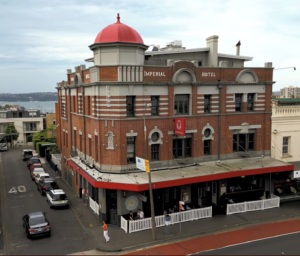
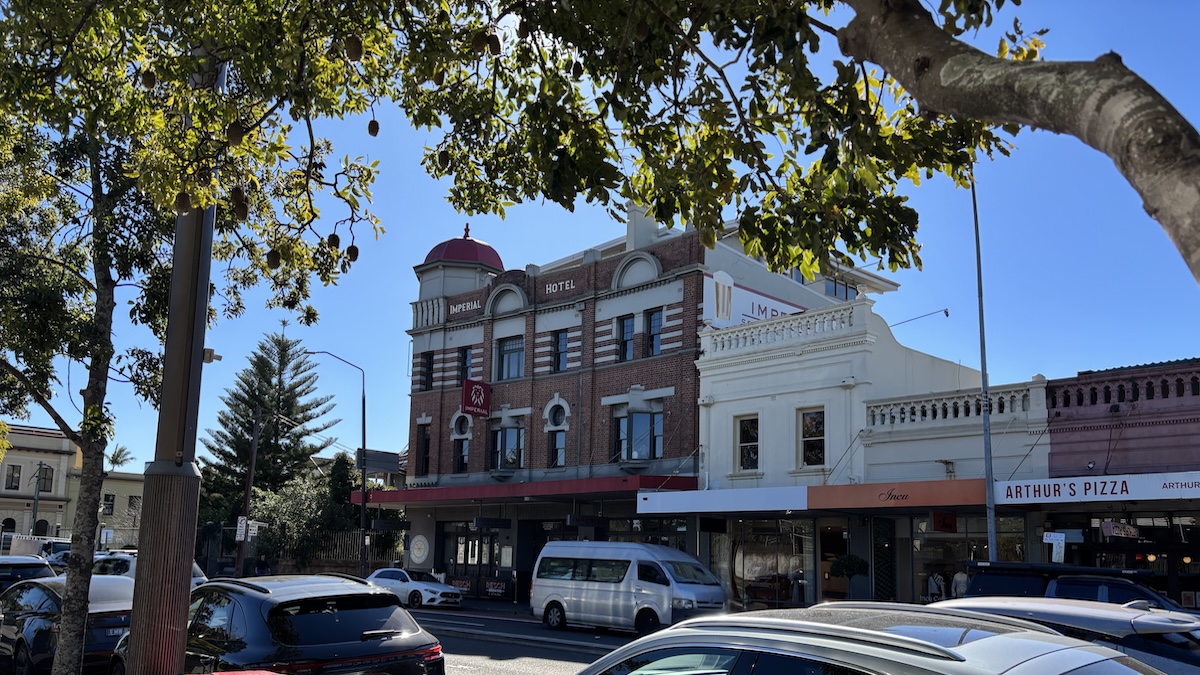
The Imperial Hotel, Paddington
Alice is a great-granddaughter of beer brewing pioneer Edmund Resch, one of Australia’s most successful business people in New South Wales in the late 19th and early 20th centuries. The Imperial Hotel has been in the family since Edmund Resch acquired in the early 20th century. Now, for the first time, the family that helped shape Sydney’s brewing industry is making beer on the premises.
“It was always a bit of a dream,” Alice says. “We’ve got my great-grandfather’s original recipe books. We started thinking about whether it would be possible to recreate some of those beers and understand what they really tasted like. During lockdown we started Resch Family Brewing and began experimenting with making beer. Now we’ve got eleven different beers on tap here and at Resch House in the city. Everything is brewed in-house at the Imperial.
Edmund Resch arrives in Australia
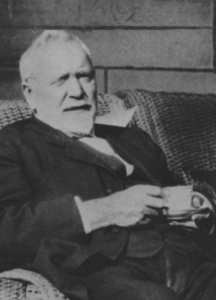
Edmund ReschEdmund Resch (1847–1923), founder of Resch’s brewing company and later owner of the Imperial Hotel, Paddington. Photograph undated.
Edmund left Germany at the age of 16, intending to seek his fortune in Russia. But when the ship he planned to take from Liverpool failed to materialise, he pawned his pocket watch and bought a ticket on the next departing vessel, the SS Great Britain, bound for Australia. “He arrived with a trunk full of warm clothes packed for a Russian winter and no money in his pocket,” Alice says. “What followed was really the Australian dream; a lot of hard work, a little bit of luck and a great deal of learning along the way.”
Edmund headed for the goldfields before turning to the production of soft drinks in western New South Wales. He established breweries in Wilcannia, Silverton and, eventually, Sydney. His beers became household names, and by the 1890s the company’s principal brewery was located in South Dowling Street, near Moore Park.
By the turn of the 20th century, Edmund had become a prominent figure in Sydney’s commercial and civic life. He served as the Netherlands’ consul in Sydney for 12 years and was appointed brewer to the Governor-General from 1904 to 1914. Yet despite his contribution to Australian industry and his support for employees who enlisted during the First World War, Edmund was interned because he was German-born.
Edmund acquires the Imperial Hotel
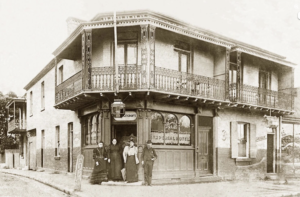
The Imperial Hotel c1983 – 1987. Licensee Alice Flitcroft third from left.
As the brewing business expanded, the Resch family acquired hotels, including the Imperial Hotel in Paddington. The hotel had opened as the Cross Guns Hotel in 1874 and was renamed the Imperial Hotel in 1891. Around 1893, the licensee was Alice Flitcroft. Edmund is believed to have held the lease in 1901 and acquired the property in 1910 rebuilding it as the substantial Federation-style hotel that still dominates the corner today. His initials, “ER”, remain prominently displayed on the facade.
According to Alice, some of the hotel’s distinctive features reflected her great-grandfather’s highly practical approach to hotel design. “He had all his kitchens on the roofs of his hotels,” she says. “If the kitchen caught fire, the fire burnt up and didn’t take the pub with it.”
The family’s connection with the Imperial survived even after the Resch brewing business was merged in 1929 with Tooth & Co. Remarkably, the hotel remained subject to a 90-year brewery lease established in 1910. “That finished in 2000, and that’s when the family took back management of it,” explains Alice.
The Imperial through changing times
During the 150 years that a hotel has occupied the site, the Imperial and its predecessor have witnessed dramatic changes in Paddington. “I understand the Apollo Bar within the hotel became the first gay bar on Oxford Street,” Alice says. “It’s also been home to a Thai restaurant, the Snake Creek Cattle Company Steakhouse and is now a purveyor of fine pies.” The family undertook a major renovation of the hotel about 20 years ago. During the works, descendants of former tenants arrived with an old photograph showing their family standing outside the front entrance. “It showed details of the hotel that had disappeared,” Alice says.
The renovation also produced some unexpected excitement. “There was interest from police because they were looking into a historical disappearance. We had people turning up with all sorts of ghost-detecting gadgets after we reopened,” Alice laughs. “If the walls could tell stories, there’d be quite a lot of stories to tell.”
As with many buildings that have stood in Paddington for generations, the Imperial has been part of a neighbourhood that was once very different from the affluent and bustling suburb of today. Alice recalls meeting a woman in her 90s who had worked as a lookout runner for the razor gangs when she was a child. “She told me stories about kids positioned up and down the streets passing messages,” Alice says.
Even into the middle of the twentieth century, parts of the area retained a rough reputation. Alice was told that brewery representatives collecting rent from brewery-owned hotels “would walk from White City and practically run up the hill because it wasn’t considered safe to wander around here”.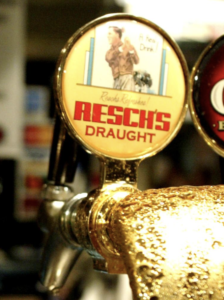
Today, Alice speaks warmly of the suburb and its community. “It’s the most fantastic, friendly suburb,” she says, adding that although Paddington has changed, it remains a good place to be.
Back to Brewing
Visitors to the Imperial today can see the brewery, meet the brewer and learn about the process behind the beers. The range includes lagers, pilsners, dark ales and porter, alongside gin, vodka, alcoholic ginger beer and seltzers. “We’re lucky with our brewers,” Alice says. “There are so many different choices. Come and have a taste – there’s bound to be something you’ll like.”
As told by Alice Resch Le Cras to Judy Hitchen for The Paddington Society, Paddington, 9 June 2026