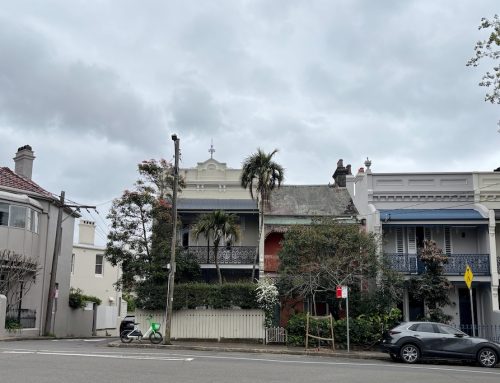
Update 23 July 2026
Notifications indicate that restoration works to Juniper Hall have commenced in line with the National Trusts Conservation Management Plan. In late July 2026 signage was placed on the boundary fence of Juniper Hall, as follows:
Juniper Hall Restoration Works
A programme of restoration works will commence shortly on the exterior fabric of this heritage building in line with the Conservation Management Plan provided by the National Trust. This extensive programme is expected to take up to 12 months to complete.
Juniper Hall Pty Ltd
A short history of Juniper Hall.
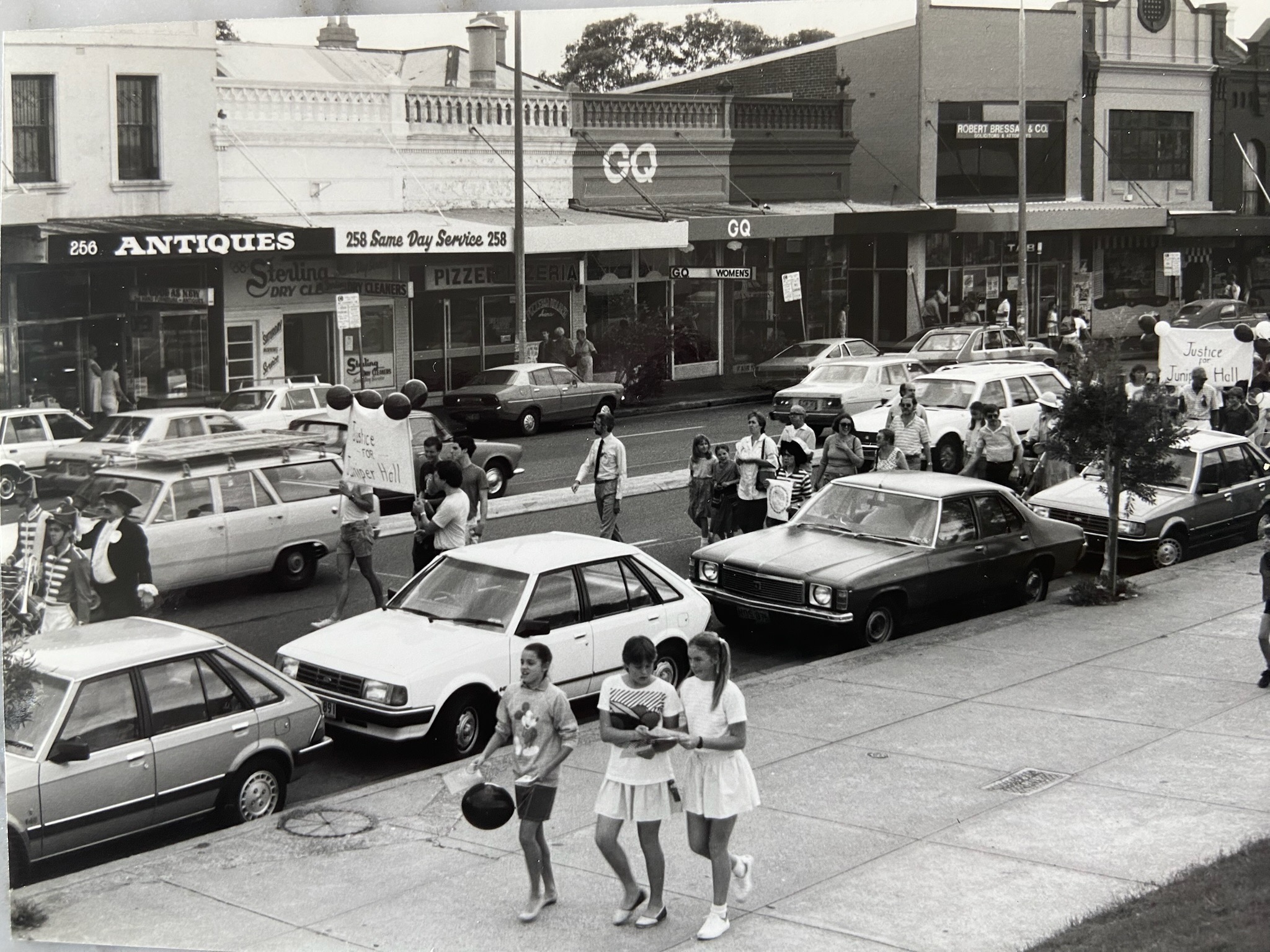
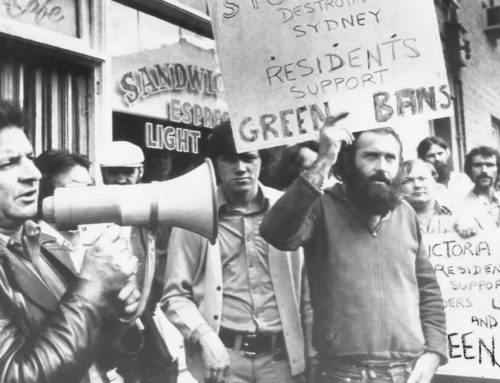
March to save Juniper Hall – 1980s [click to enlarge]
By 1850 due to financial difficulties, Cooper leased the house as an orphanage; this gave way to a girls’ school in 1858, later to a home for destitute children. By 1895, re-named Ormond House, it was used by the State Children’s Relief Board, and in 1910 as offices of the Children’s Court. In 1924 the house was purchased by a businessman and turned into eight flats with a row of shops built along Oxford St. It soon fell into disrepair, and development applications were lodged with Woollahra Council in the early 1980s for demolition and re-development as a shopping arcade.
Juniper Hall saved by community groups including the Paddington Society
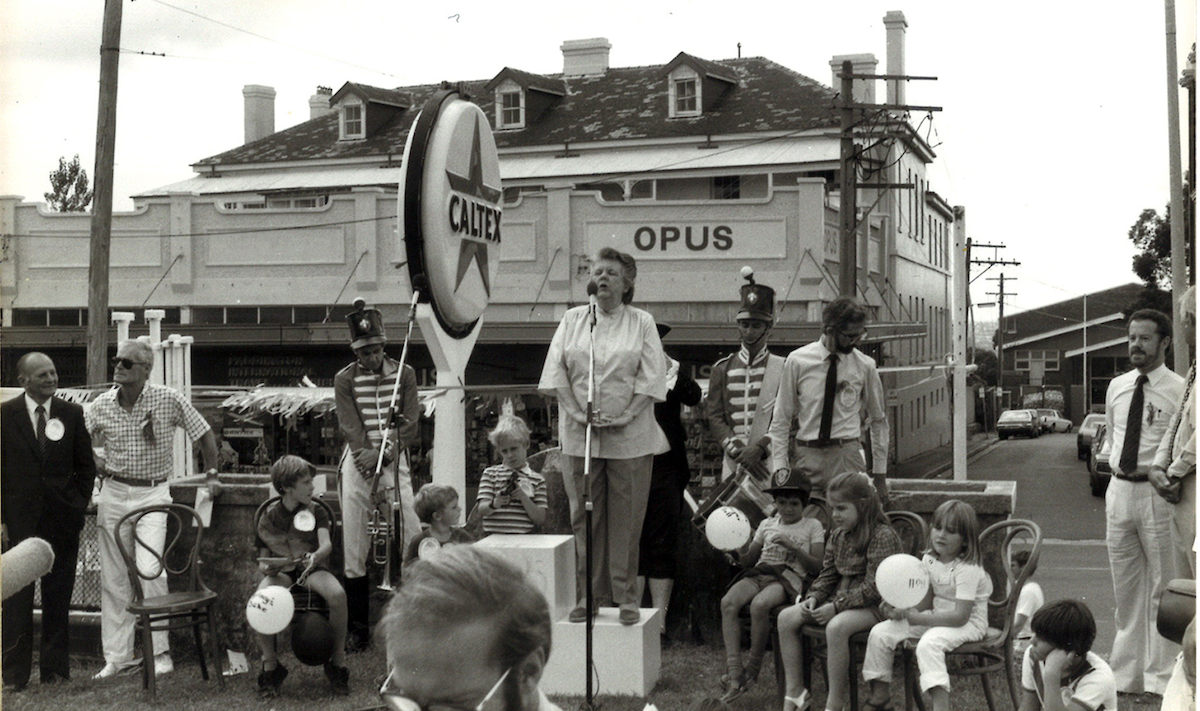
A community campaign was launched to save Juniper Hall, led by Friends of Juniper Hall and the Paddington Society. Included was a huge march down Oxford Street and a public rally headed by Pat Thompson (pictured above). As a result, Woollahra Council refused the applications and the State government gazetted a Permanent Conservation Order on the building. In 1983 NSW Premier, Neville Wran, agreed to a Bicentennial Grant of $750,00 to the National Trust to buy the property, augmented by $200,000 from Woollahra Council. Community and corporate (Amatil) funding of around $1,000,000 followed in addition to $500,000 from a bequest by Leslie Bridal, a Paddington resident and member of the Society. Along with restoration of the house, the front boundary wall and front garden were re-instated to match the original appearance. The purchase and restoration cost close to $2.5 million.
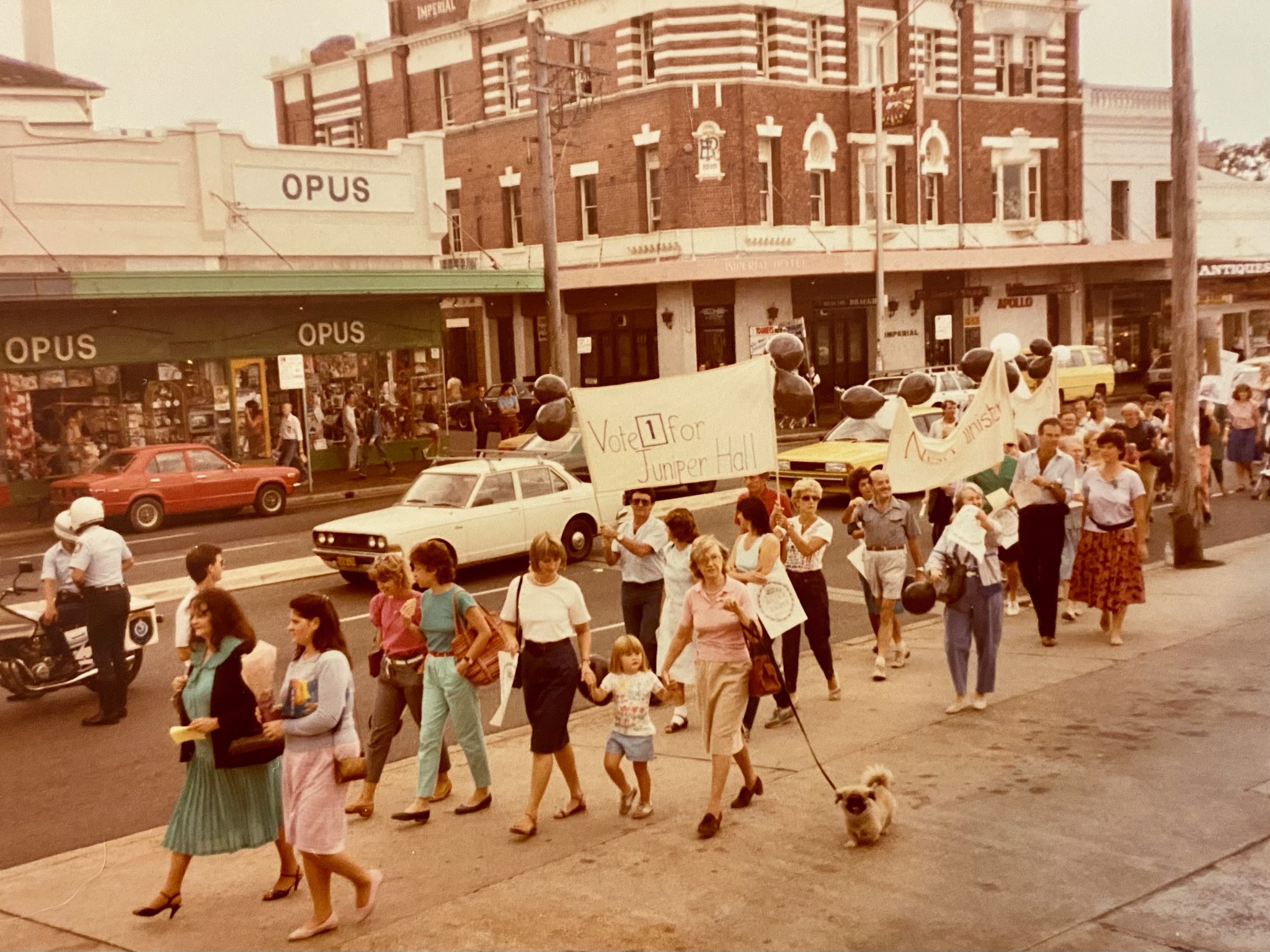
March to save Juniper Hall – 19080s [click to enlarge]
New Leasehold for The Moran Arts Foundation
In 2013, the Moran family, descendants of the original owners, acquired a 99-year leasehold from the National Trust through Juniper Hall Pty Ltd (The Moran Arts Foundation) with the family assuming responsibility for its maintenance. A Conservation Management Plan was produced in May 2016.
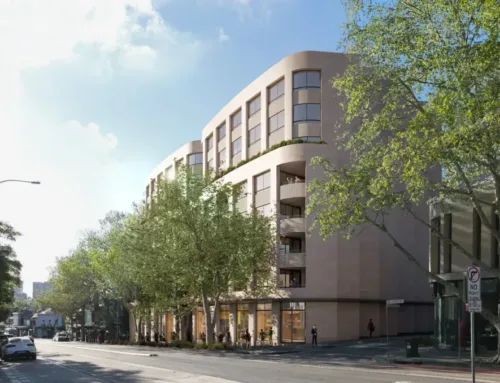
Since Juniper Hall is a Heritage Item in both the NSW State Heritage Register and Woollahra LEP, any demolition or development must be approved by Woollahra Council. In 2019 a development application for a new art gallery at the rear was approved, while a further December 2025 application for basement parking was refused in June 2026, mainly due to heritage and archaeological concerns.
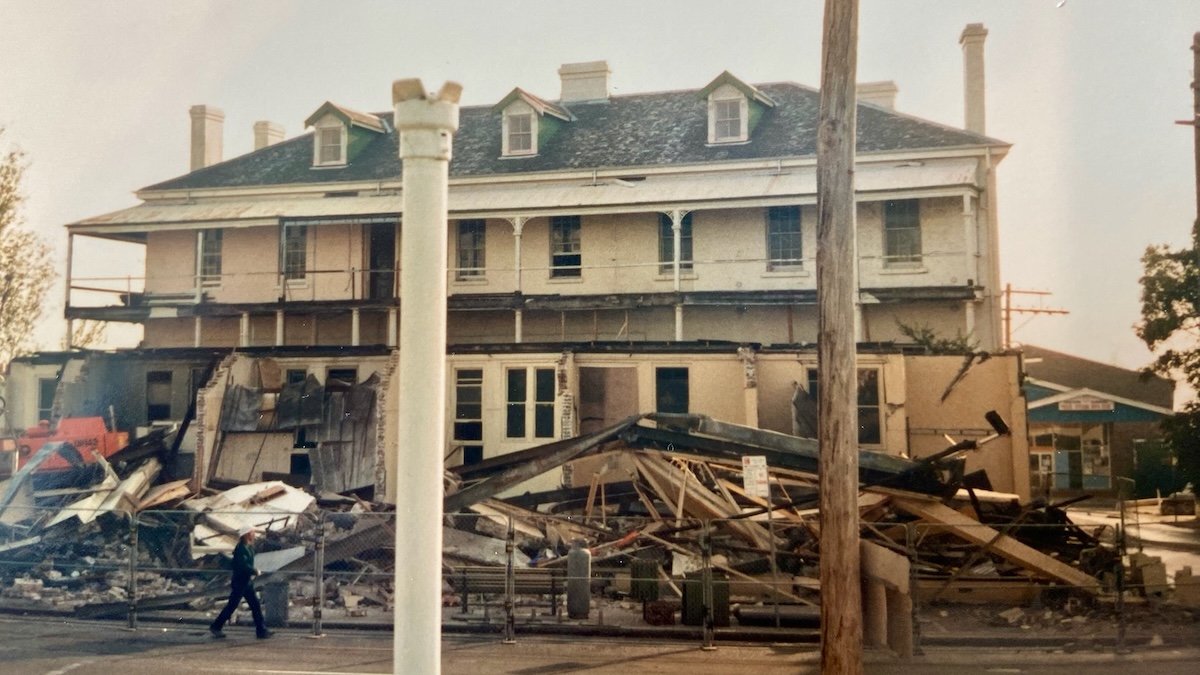
Demolition of the Oxford Street shops [click to enlarge]
The Society was notified in a letter dated February 2026 by the National Trust of a change of ownership. An excerpt from the letter to the Society is below:
…….. The National Trust has decided to sell Juniper Hall to a company associated with the Moran family as it is better suited to be cared for by an entity related to the descendants of the original owners. This sale will secure its future for subsequent generations and maintain its legacy as an historic property of significance……..
For now Heritage NSW, The National Trust and The Paddington Society will continue to monitor and make submissions to Council on any future development proposals.
The Society looks forward to seeing continuing access to the house via the Moran Arts Exhibitions.