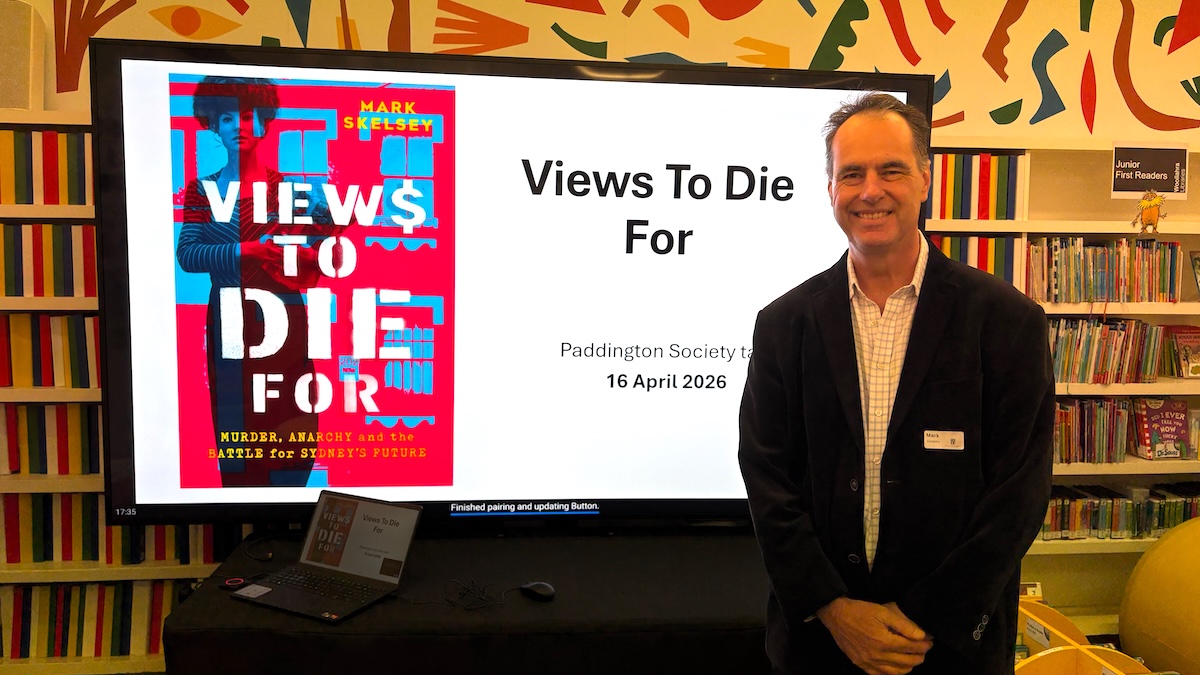
On 16 April, the Paddington Society, in partnership with Paddington Library and Woollahra Council, hosted a talk by Mark Skelsey on his recently published book, Views To Die For.
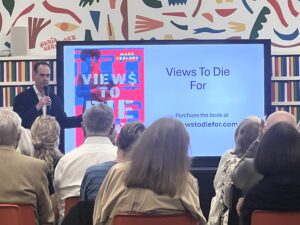
Mark Skelsey speaking at the Paddington Library, 16 April, 2026
The book explores two questions: how did a 1970s plan to raze and redevelop a historic Sydney suburb lead to a kidnapping, murder and urban warfare? And why does this tumultuous period still play a pivotal role in Sydney’s planning today?
Based on new interviews and detailed archival research, the book is an insider’s account of the flawed and secretive NSW Government scheme to totally redevelop Woolloomooloo and part of Potts Point into a “future Manhattan”.
The book was published to coincide with the 50th anniversary of the 1975 murder of Kings Cross activist and publisher Juanita Nielsen, who lived in Victoria St, Potts Point.
Views To Die For looks at what Nielsen and her contemporaries were fighting for and how this led to significant public policy gains in areas such as affordable housing, heritage and town planning public participation. The book is blend of local and political history, true crime and an analysis of current events.
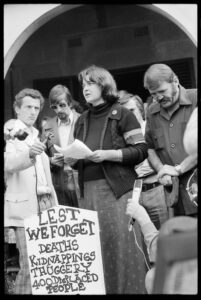
Wendy Bacon speaking at the “burial” of Victoria Street affordable housing, 1976
Mark brings considerable experience to the subject, having worked as State Political Reporter and City Editor at the Daily Telegraph, and later as Media Manager at the NSW Department of Planning.
His talk in Paddington combined archival images from the 1970s with audio recordings of interviews with Nielsen, activist Wendy Bacon and other key players from the period, alongside newspaper coverage promoting redevelopment at the time.
The themes of the talk resonated strongly with current planning challenges facing Paddington and wider Sydney.
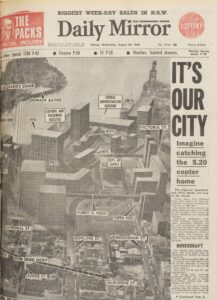
Daily Mirror, with plans for Woolloomooloo, August 20, 1969
At the conclusion of the talk, Mark said: “I think from the Victoria St and Woolloomooloo battles came three enduring ideals for our city, which although largely unfulfilled, are just as relevant and important today as they were 50 years ago.”
“The first ideal is that our city should be the home for everyone, from the very vulnerable, the vulnerable and the working poor, through to the middle class and of course the rich.
“Secondly, that as our city changes, we should preserve our most important historic markers of the past, and of the places which have cultural, natural and social significance to us all.
“And thirdly, that it is us – the people – who own the city, not the government or the lobby groups of whatever colour they are, and that we should all be able to participate in influencing how our city changes.”
He noted that these ideals remain contested and, in some areas, under pressure.
In the final chapter of the book, Mark looks at current planning reforms and whether they are in line with these ideals or the period’s policy legacy.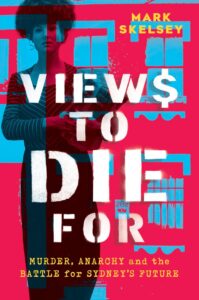
“What I’ve tried to do in this book is to show the mistakes of the past and how this should inform the decisions that we make in the future,” he said.
“I also wanted to celebrate the achievements of Nielsen and other activists, which have led to long-term change.
“And it’s my belief is that we can do all three – we can have public participation in planning, affordable housing and retain heritage – it’s not easy but we need to keep striving for this.”
Views to Die For is available at www.viewstodiefor.com.au. It’s also available at Ariel Books in Paddington and the Potts Point Bookshop (call ahead to make sure copies are still available). Mark Skelsey can also be followed on Instagram at @ChangingSydney.
The Society thanks Woollahra Council for providing refreshments, the Paddington Library staff for their assistance with the event, and all those who attended.